Designing learning experiences grounded in real work situations
Many e-learning programmes focus on information and awareness. While knowledge is important, meaningful learning often emerges when concepts are connected to people’s lived experience of work.
Mental health is approached through the understanding of work and work experience.
Our approach to e-learning design combines work psychology, the Work Clinic traditions, ergonomics, systemic thinking, and complexity approaches.
Learning is not limited to the transmission of information. Participants are invited to explore real work situations, reflect on their own experience, and develop new ways of understanding work and mental health.
How We Design E-Learning
- Learning begins with situations that participants recognize from their own work experience.
- Concepts are introduced as tools for understanding experience rather than as abstract theories.
- Reflection activities encourage participants to identify possibilities for action in their own context.
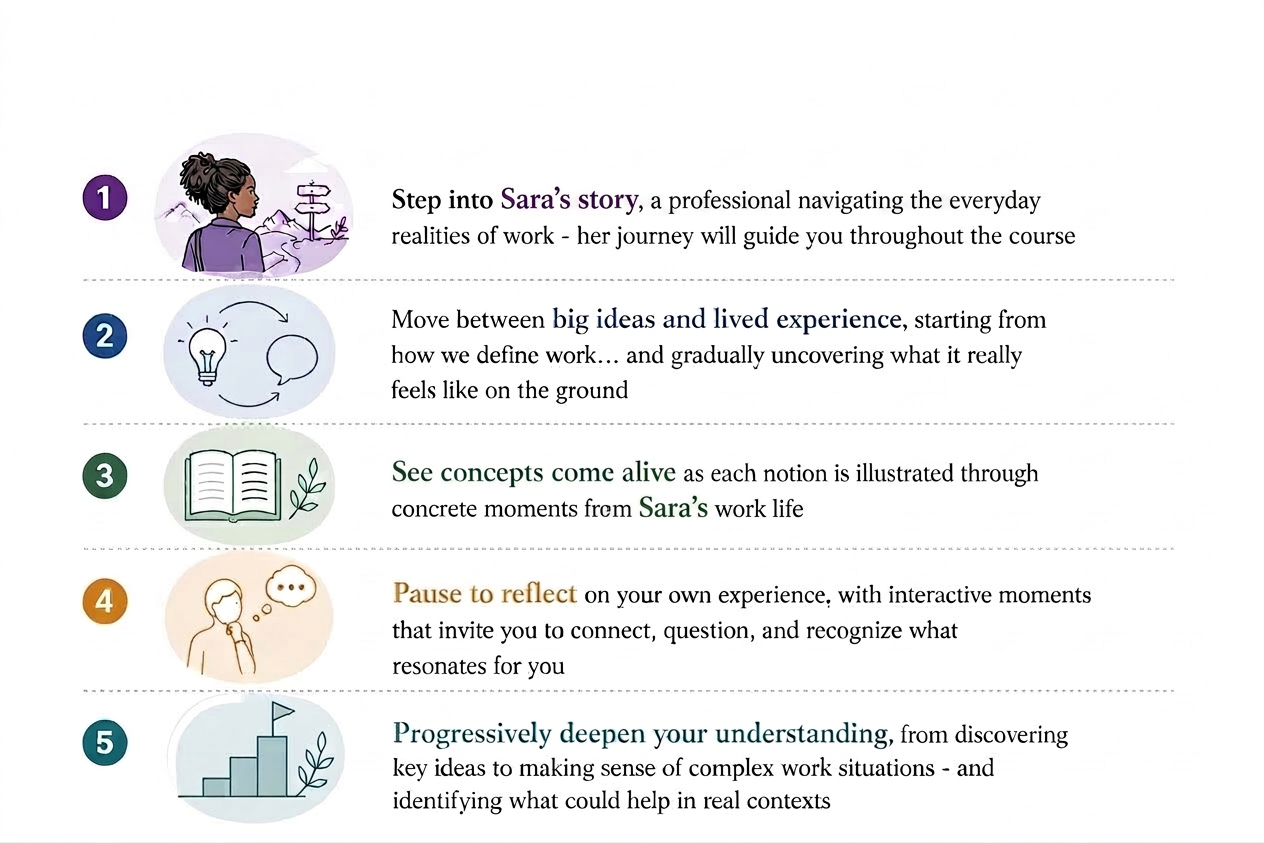
- A five-step learning journey : The e-learning modules are built around a five-step pedagogical framework designed to connect concepts with lived work experience. Each learning path combines a concrete work situation (Sara’s story), conceptual insights, guided observation, reflective practice, and practical applications. This structure supports a progressive understanding of work and its relationship to mental health while encouraging reflection, dialogue, and action.
Example of E-Learning Themes (9 modules)
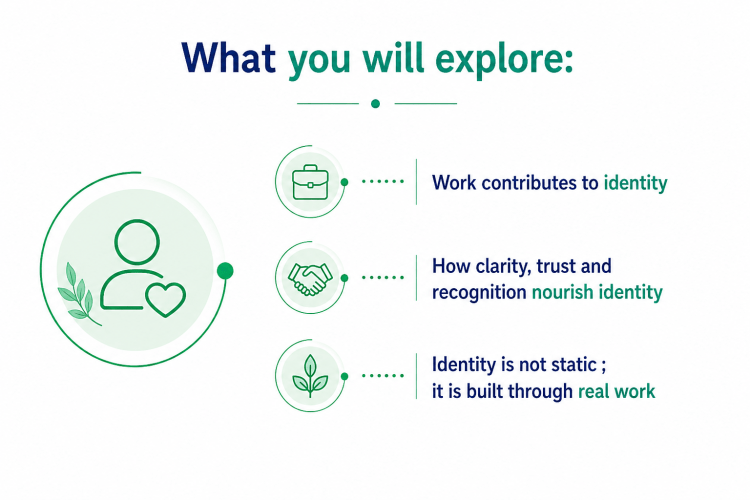
The e-learning modules explore key dimensions of mental health at work through the lens of work activity. Each learning path focuses on a specific theme and combines conceptual insights with practical refelection.
Together, they offer a comprehensive framework for understanding how work influences mental health and how individuals, teams, managers, and organizations can support healthier and more sustainable ways of working.
Work & Mental Health
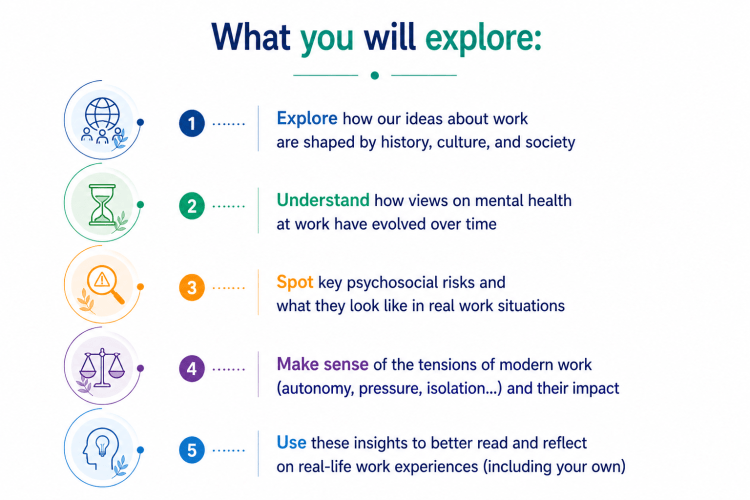
Work & Identity Construction
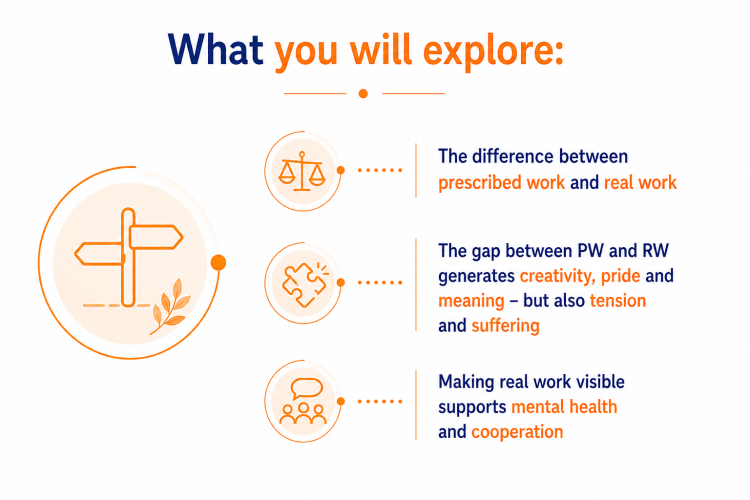
Prescribed & Real Work
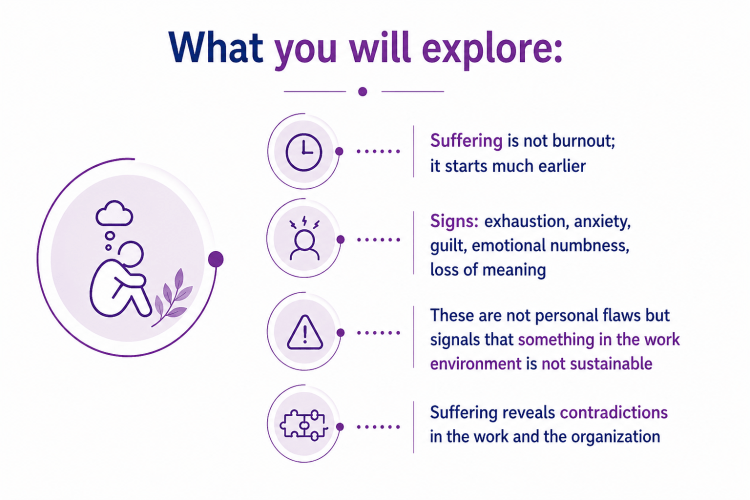
Psychic Suffering at Work
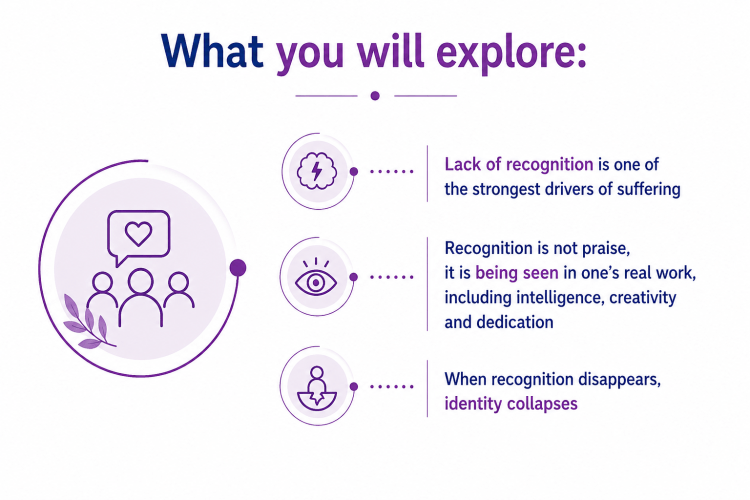
Recognition
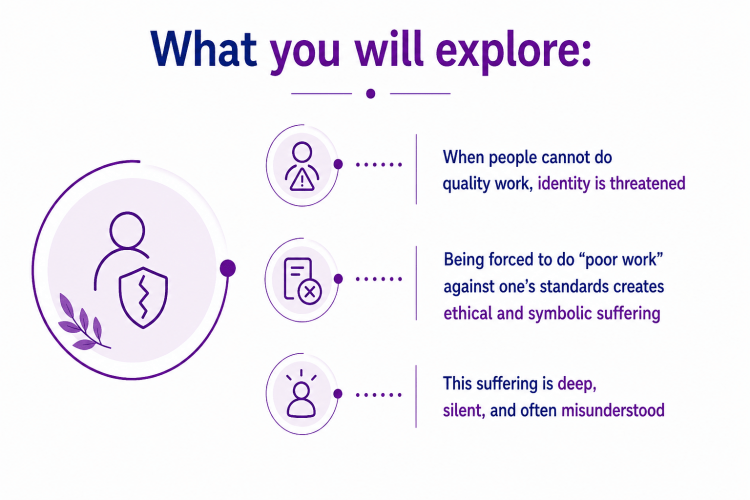
Blocked Quality of Work
Defense Strategies
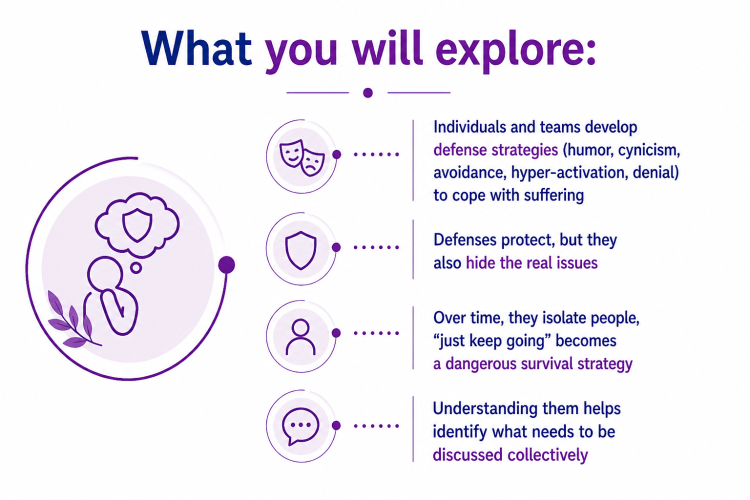
Collective Dimension of Work
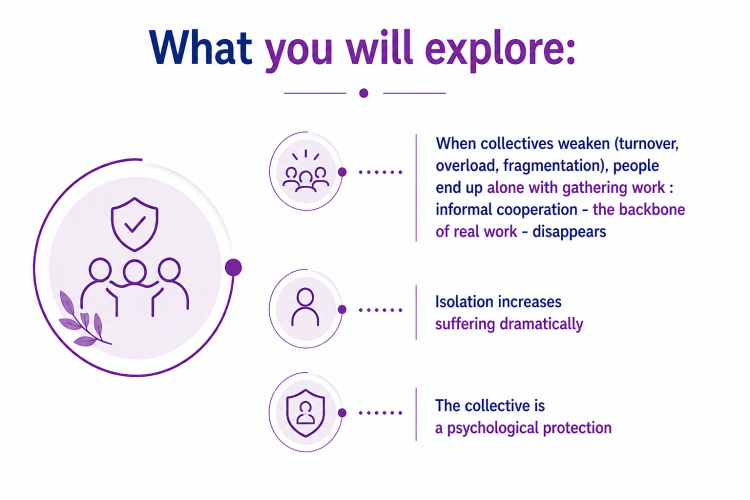
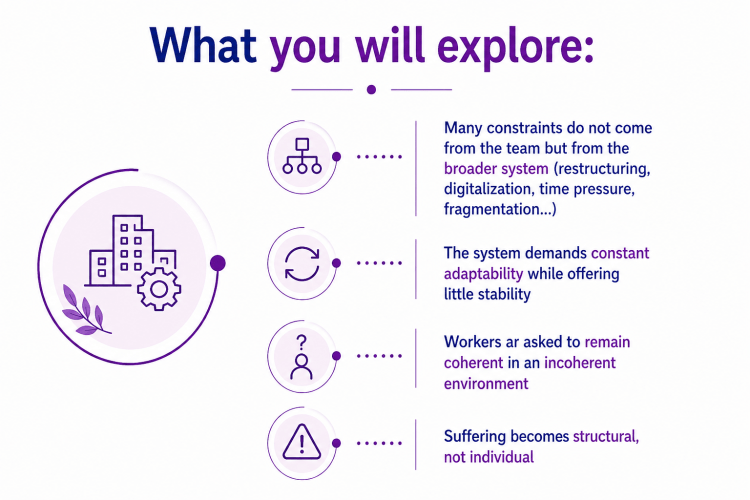
Organizational Factors Affecting Mental Health
Custom Learning Programmes
Learning programmes can be developed or adapted to reflect the realities, culture, and challenges of a specfic organization.
Our approach often incorporates narrative characters whose experiences reflect the realities, tensions, and challenges of everyday work.
Sara, developed for a workplace mental health programme, is one example. Through her story, participants are invited to explore concepts such as work experience, recognition, quality of work, collective dynamics, and mental health. These characters are not fixed models. They can be adapted or created to reflect the culture, professions, challenges, and work realities of o a specific organization.
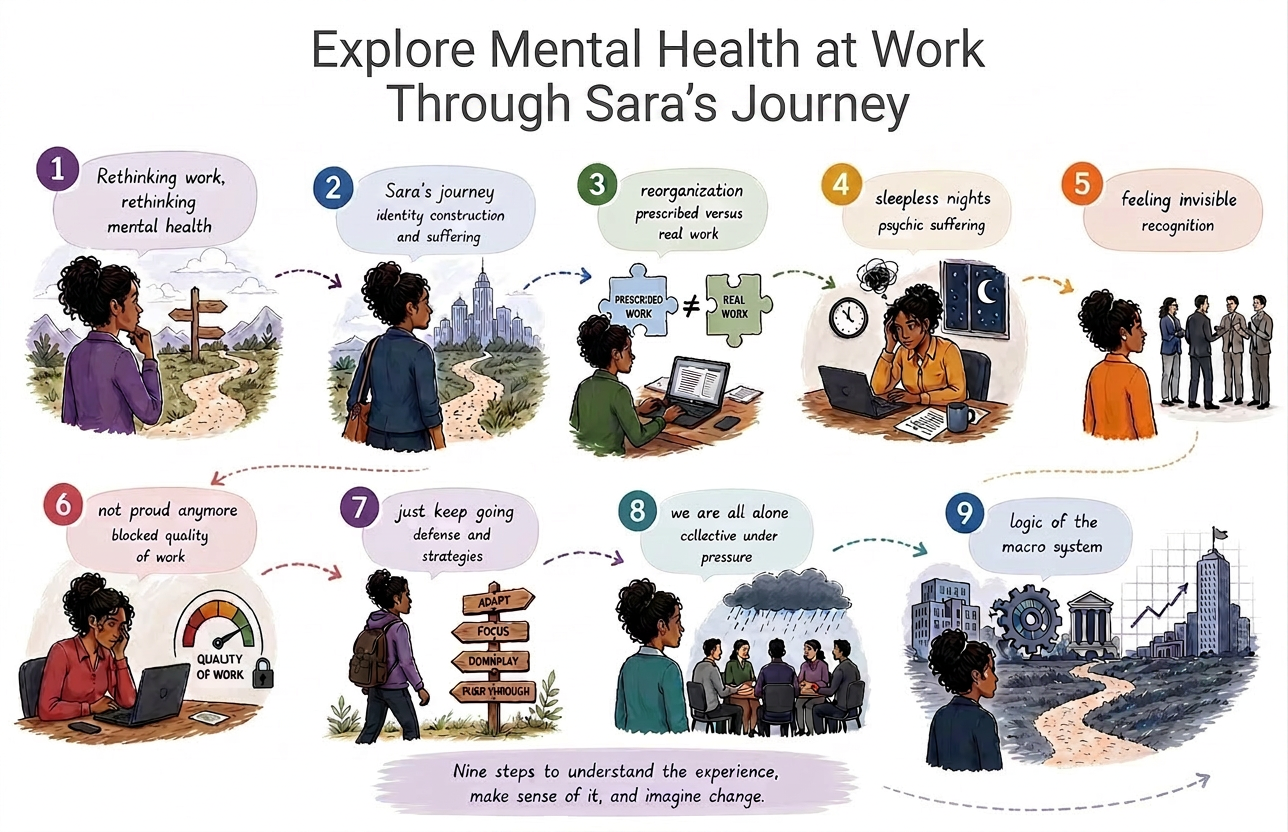
In this way, learning becomes more engaging, more relevant, and more closely connected to participants’ own experience.
A narrative character can serve as a thread throughout an entire learning journey. Whether the context is healthcare, international organizations, public administration, education, or the private sector, characters and situations can be designed to reflect the specific realities of the organization.
By following a recognizable work journey, participants are encouraged not only to learn new concepts, but also to question assumptions, recognize familiar situations, and connect learning with their own professional experience.
From individual learning to collective reflexion and action
These modules are designed not only as individual learning experiences, but also as resources for teams, managers, and organizations.
When combined with facilitation kits, they can help create structured opportunities for dialogue about work, work experience, cooperation, quality of work, and organizational challenges.
Managers, HR professionals, and team leaders can be supported in using these resources to facilitate meaningful conversations and collective reflection within their teams.
Creating spaces where work can be discussed, reflected upon, and developed is already a way of supporting mental health at work. By making work visible and open to dialogue, organizations can strengthen learning, cooperation, recocgnition, and the collective capacity to act.
Looking to develop a learning programme tailored to your organization ?
Let’s discuss your project.
 Rethinking Work
You must be logged in to post a comment.